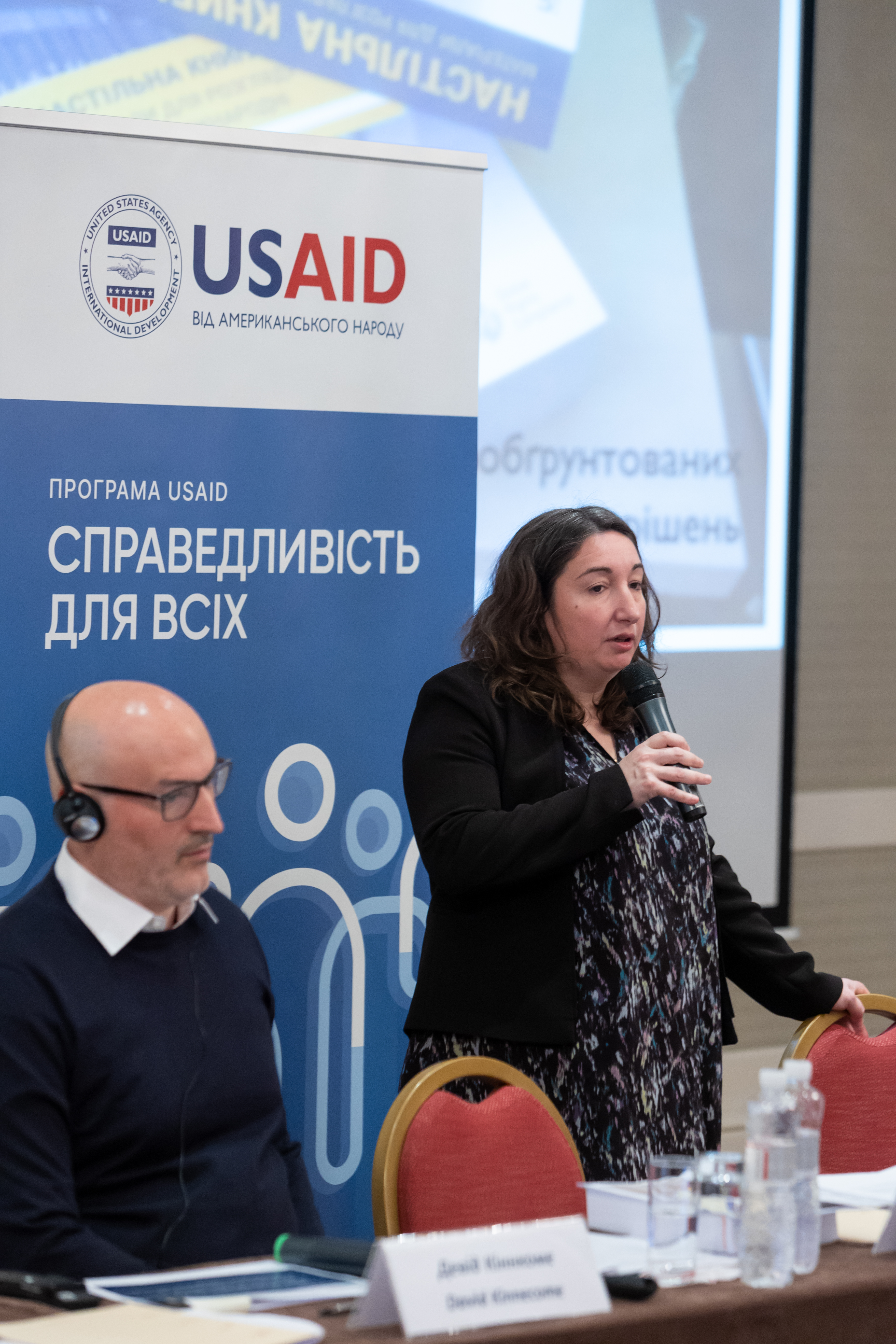
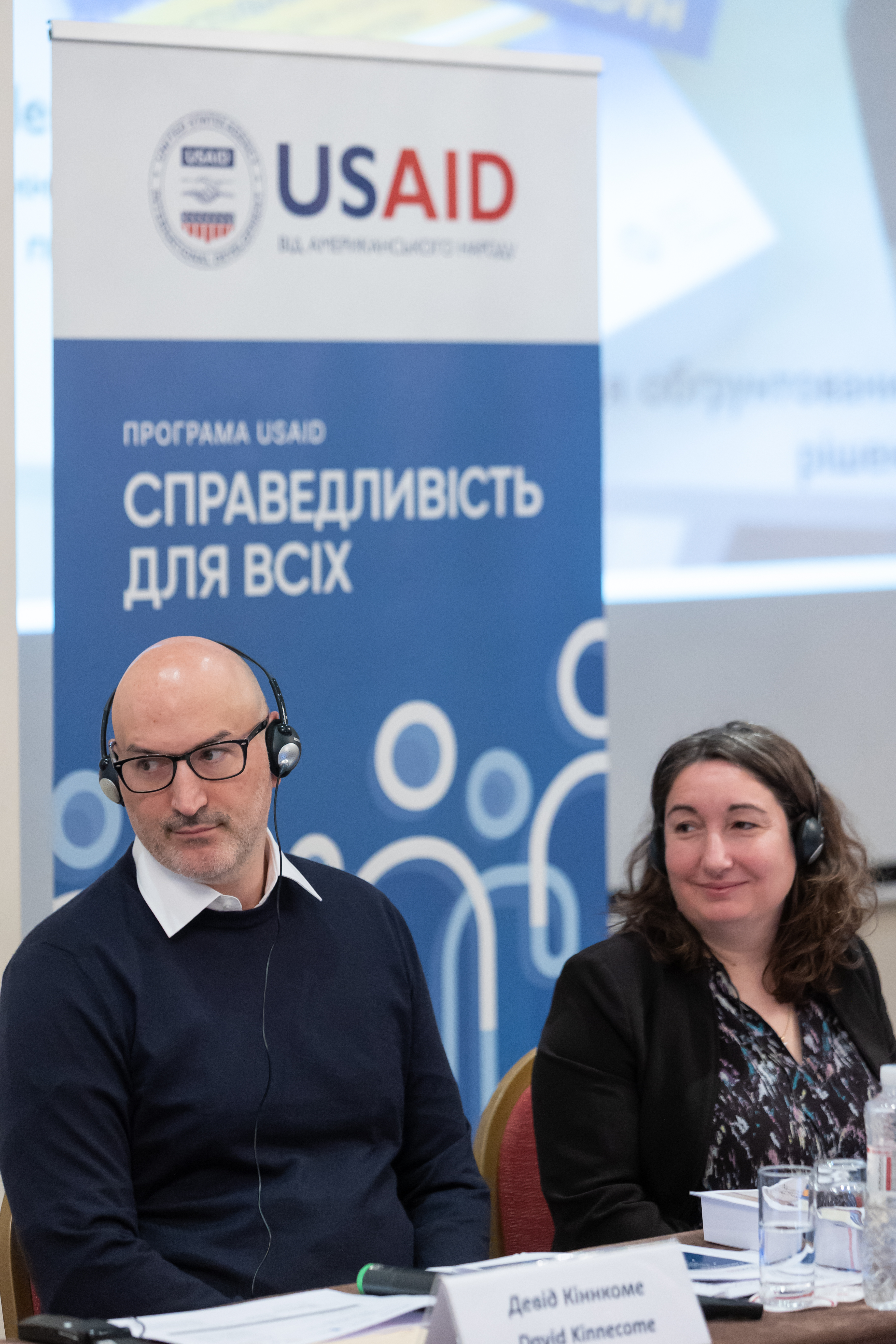
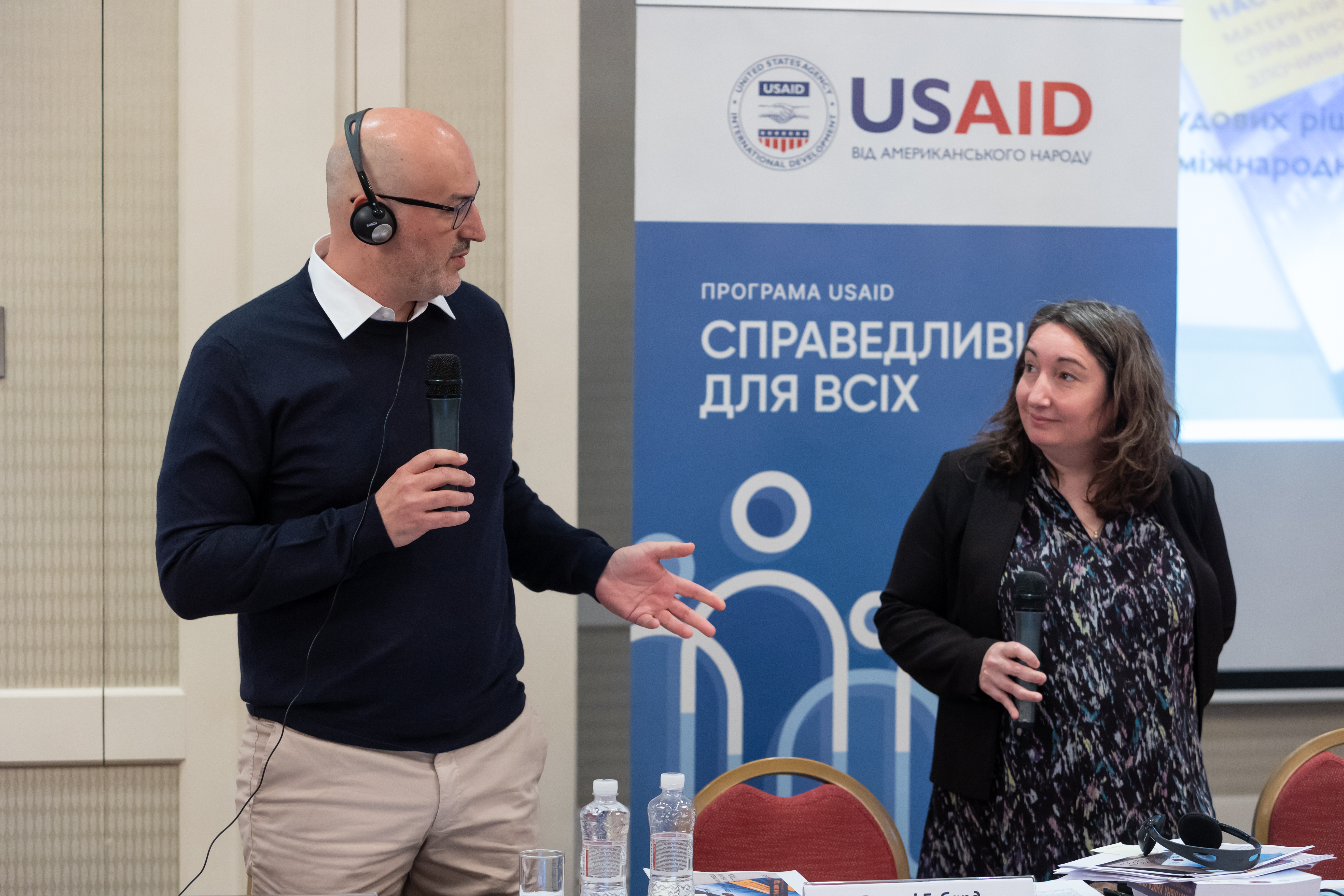
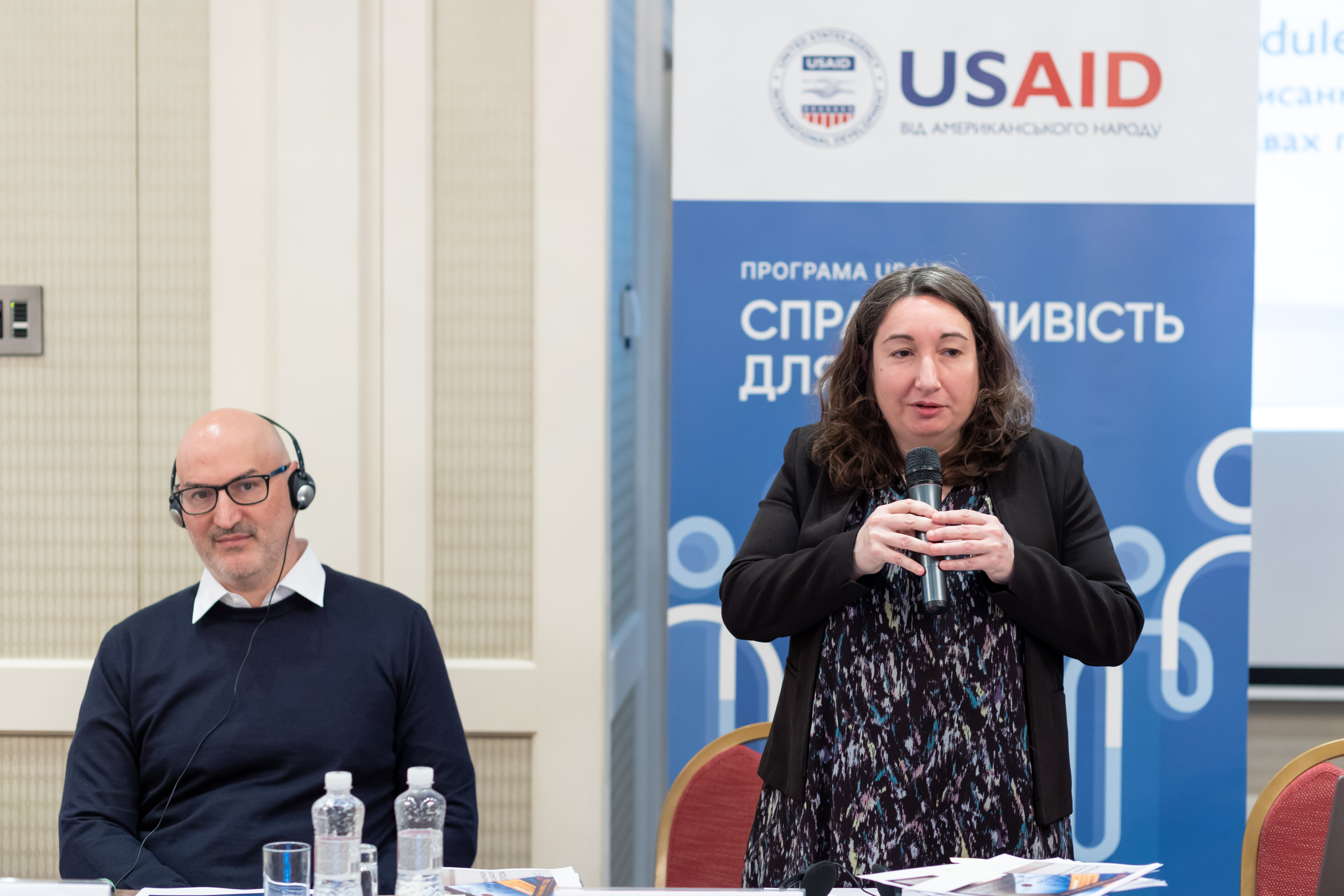
Thursday, 16th of May, marked the inaugural session of the online training series jointly organized by the Asser Institute, Global Rights Compliance, and the Ukrainian Bar Association, as part of the MATRA-Ukraine Project. 

UpRights Valerie Gabard and David Kinnecome delivered a presentation to explore the nuances of applying international law within the Ukrainian legal framework with a view to deepening knowledge among Ukrainian lawyers who represent the accused and victims in cases of crimes related to the conflict in Ukraine.   

Building upon UpRights’ work on the Benchbook on the Adjudication of International Crimes under Ukrainian Domestic Law, developed by international and Ukrainian experts in collaboration with judges and with support from the USAID Justice for All Activity, Valérie and David notably underlined the role of international law in the adjudication of international crimes under Article 438 and Article 442 of the Criminal Code of Ukraine. 

On Wednesday, May 15, 2024, UpRights’ David Kinnecome took part in the event, “Sanctions, Remittances, and (in)Security: Legal Conundrums, Financial Paradoxes, and Humanitarian Puzzles,” organized by the Asser Institute and the University of Leiden. 

Throughout the day, the conference brought together students, officials, practitioners, and scholars to explore the intricate interplay between international law and sanctions authority, the nuanced role of financial systems as conduits within the sanctions landscape, and the emergence of novel strategies employed by major powers to circumvent existing sanctions frameworks.  

As part of the roundtable on ‘Sanctions and the Pursuit of Accountability for International Crimes: Critical Reflections’, David addressed the pivotal issue of utilizing sanctions-related funds to facilitate compensation for victims of such crimes, underscoring the imperative of ensuring tangible restitution within sanction regimes. 

As we reflect on the rich discourse and insights garnered from yesterday’s proceedings, we are reminded of the imperative to continue fostering dialogue and collaboration within the realm of sanctions scholarship and practice.  

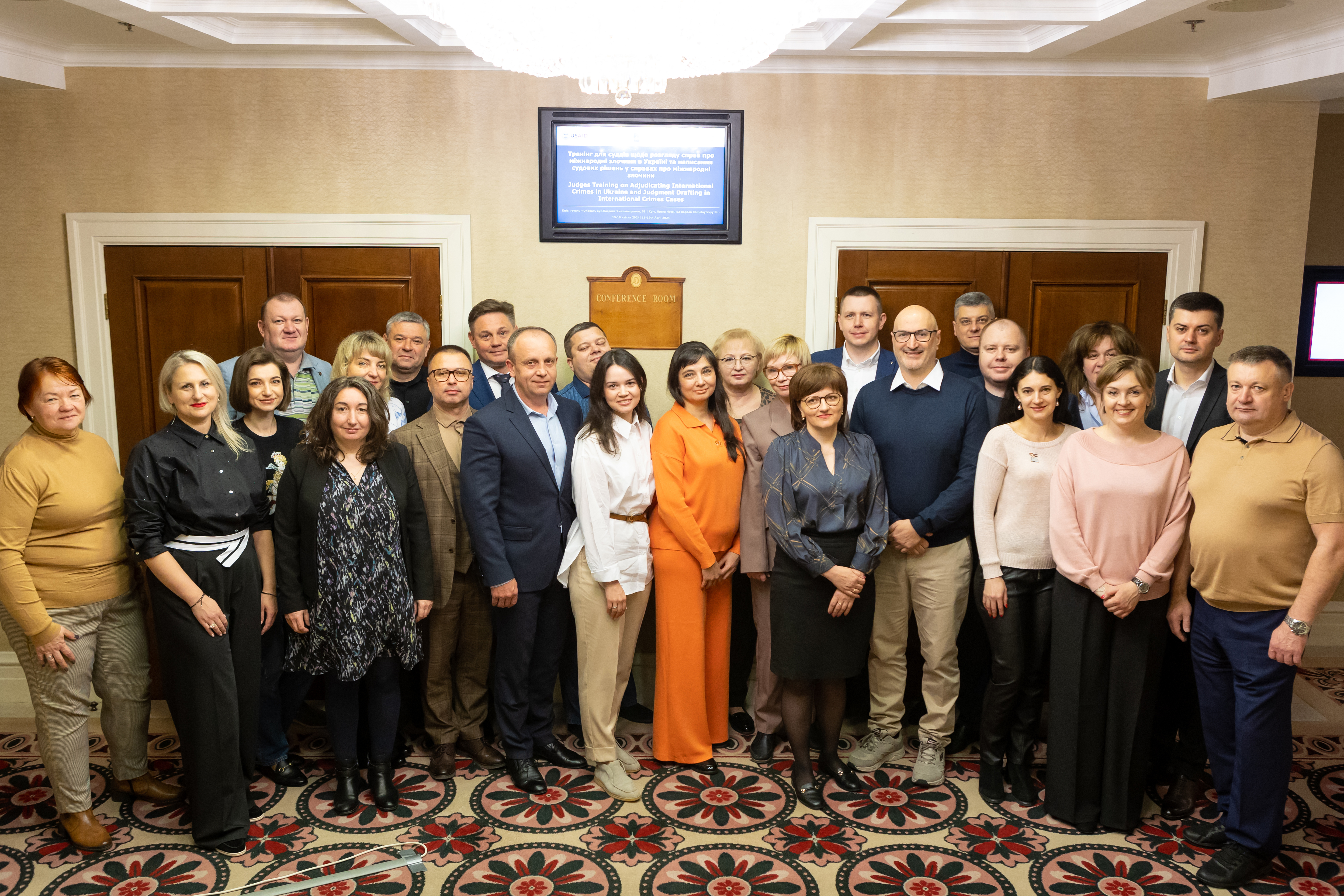
From April 15 to 19, 2024, Uprights’ Valérie Gabard and David Kinnecome contributed as experts in a training for judges on the adjudication of international crimes in Ukraine and on judgment drafting in international crimes cases. The training was organized by the National School of Judges with the support from USAID Justice for All Activity, Global Rights Compliance and T.M.C. Asser Institute, which implements the Dutch-funded MATRA-Ukraine Project. 

Alongside other experts specializing in international humanitarian law and international criminal law, as well as a judge from the International Criminal Court, UpRights’ Valérie Gabard and David Kinnecome shared their insights and subject matter expertise with participants. 


During the training, 25 Ukrainian judges from throughout the country improved their knowledge, skills, and abilities in evaluating evidence in trials involving international crimes and applying international customary law in actual cases in Ukraine. Participants also discussed how to apply modes of liability to international crimes under the Criminal Code of Ukraine, and the importance of taking victim-centred, gender-sensitive, and child-sensitive approaches in adjudicating war crimes cases. 

The program further included interactive sessions on how to draft well-reasoned judgments in international crimes cases. Experts shared with participants guidance on judgment drafting for the adjudication of war crimes cases in Ukraine based on international best practices, covering issues related to presenting evidence and factual findings related to the crimes prosecuted under Article 438 of the Criminal Code, as well as findings on legal elements of international crimes and modes of liability, defences. 

The training built upon the Benchbook on the Adjudication of International Crimes under Ukrainian Domestic Law developed by international and Ukrainian experts in collaboration with judges and with support from the USAID Justice for All Activity. All training participants were provided with a printed copy of the Benchbook.  

Training conclusion

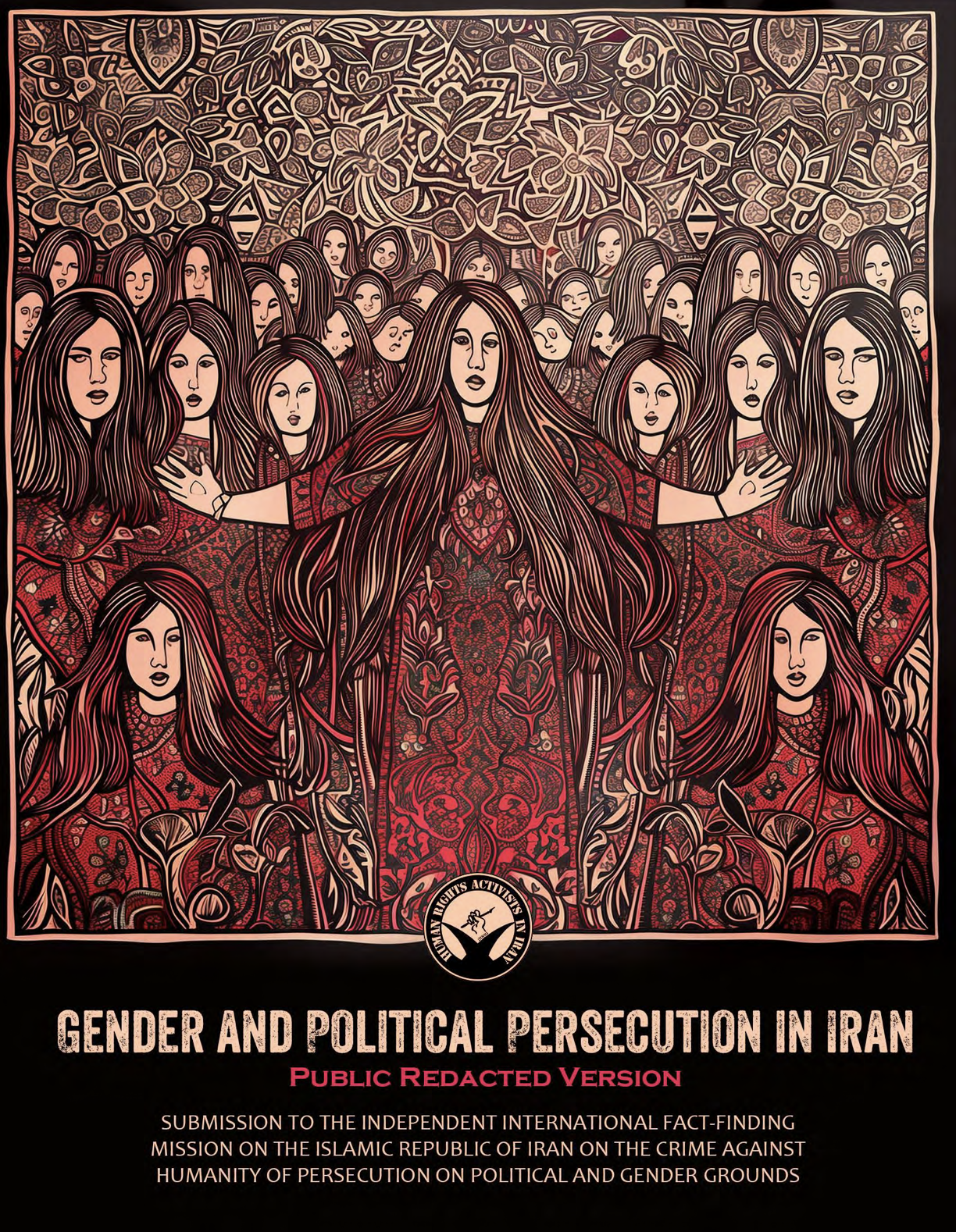
As the 55th session of the United Nations Human Rights Council approaches, Human Rights Activists (HRA) in Iran is publishing the redacted version of a submission filed in December to the Independent International Fact-Finding Mission on the Islamic Republic of Iran (FFMI).

Drafted with the legal support of UpRights, the 60-page submission argues that the facts provided to the FFMI by HRA and two trusted partner organizations should lead the FFMI to conclude that crimes against humanity, and in particular persecution on political and gender grounds, have taken place in the Islamic Republic of Iran since at least 16 September 2022.

The redacted version of the submission is presented in five comprehensive parts, first outlining a methodological approach to collecting and verifying information. Then, it contextualises the “Woman, Life, Freedom” protests in the wider discriminatory legal framework against women, girls and LGBTQI+ individuals, detailing the facts surrounding the protests, before providing a legal analysis focusing on the crime against humanity of persecution on gender and political grounds. Finally, it presents the FFMI and UN Member States with recommendations in this respect.

To read more on HRA’s work on shedding light on the situation of human rights in Iran ahead of the FFMI’s report – set to be delivered on March 18th  – see here

UN FFMI submission

UpRights and StraLi welcome the recent ruling of the Italian Court of Cassation (Judgment No. 4557 of Feb. 1, 2024, Fifth Criminal Section). The Court of Cassation’s decision upholds the conviction of the captain of the Italian-flagged tugboat Asso 28, which, in July 2018, intercepted 101 migrants near an oil platform in Libyan Search and Rescue zones and handed them over to the so-called Libyan Coast Guard, facilitating their return to Libya.

The landmark ruling considers the appeal of the commander of the tugboat Ace 28 as unfounded and bases the decision on “the high risk [that] the migrants [might be] subjected to inhuman and degrading treatment in the detention centers […] in Libyan territory, with the impossibility of seeing their fundamental rights protected”. The Court of Cassation, therefore, declares in no uncertain terms that Libya is not a safe harbor.

Moreover, the Court of Cassation also saw in the conduct of the captain of the boat Asso 28 the elements of collective pushback, which is prohibited by the European Convention on Human Rights (ECHR), because in the act of handing over people to the Libyan authorities he failed to identify them, to obtain information about their origin and nationality, their health conditions, and to ascertain their willingness to seek asylum, among others (also recalling a landmark ruling of the EDU Court, Hirsi Jamaa and others v. Italy, 2012). In addition, the Court found a violation of the so-called principle of non-refoulement (or non-rejection), which prohibits Italy from returning individuals to countries where there is a risk that they will be subjected to inhuman and degrading treatment, and thus in the case at hand-to Libya.

In light of the Court’s ruling and their established partnership, UpRights and StraLi call on Italy to comply with international human rights standards and end its complicity with violations of migrants’ rights.

On Feb. 2, 2024, StraLi and UpRights published the report “Navigating Troubled Waters: Italy’s Human Rights Dilemma in the Mediterranean” which underlines the serious human rights violations resulting from Italy’s cooperation with Libya and, how the Memorandum of Understanding between Italy and Libya situates Italy in violation of its international human rights obligations.

The report reiterates the urgent need for Italy to reformulate its approach to international cooperation in the area of migration. In response to the most recent developments, UpRights and StraLi reiterate their call for a reconsideration of Italy’s cooperation strategy with Libya, proposing two options to ensure compliance with international law obligations:

  • Amending the Memorandum of understanding by introducing a clause specifying that respect for human rights and international humanitarian law is essential. This clause should establish an independent body to monitor compliance, a list of mitigation measures for human rights violations, and a legal framework for effective access to justice.

  • Termination or suspension of the Memorandum if amendments consistent with principles of international law cannot be introduced. Violations by Libyan authorities could justify such actions under Article 60 of the Vienna Convention on the Law of Treaties.

StraLi and UpRights also collaborated on a Article 15 Communication on War Crimes and Crimes Against Humanity Committed Against Migrants and Asylum Seekers in Libya, to initiate an investigation into the international crimes committed by Libyan armed groups against migrant persons intercepted at sea and brought back to Libya, and the potential responsibilities of Italian and Maltese authorities with respect to these crimes.